

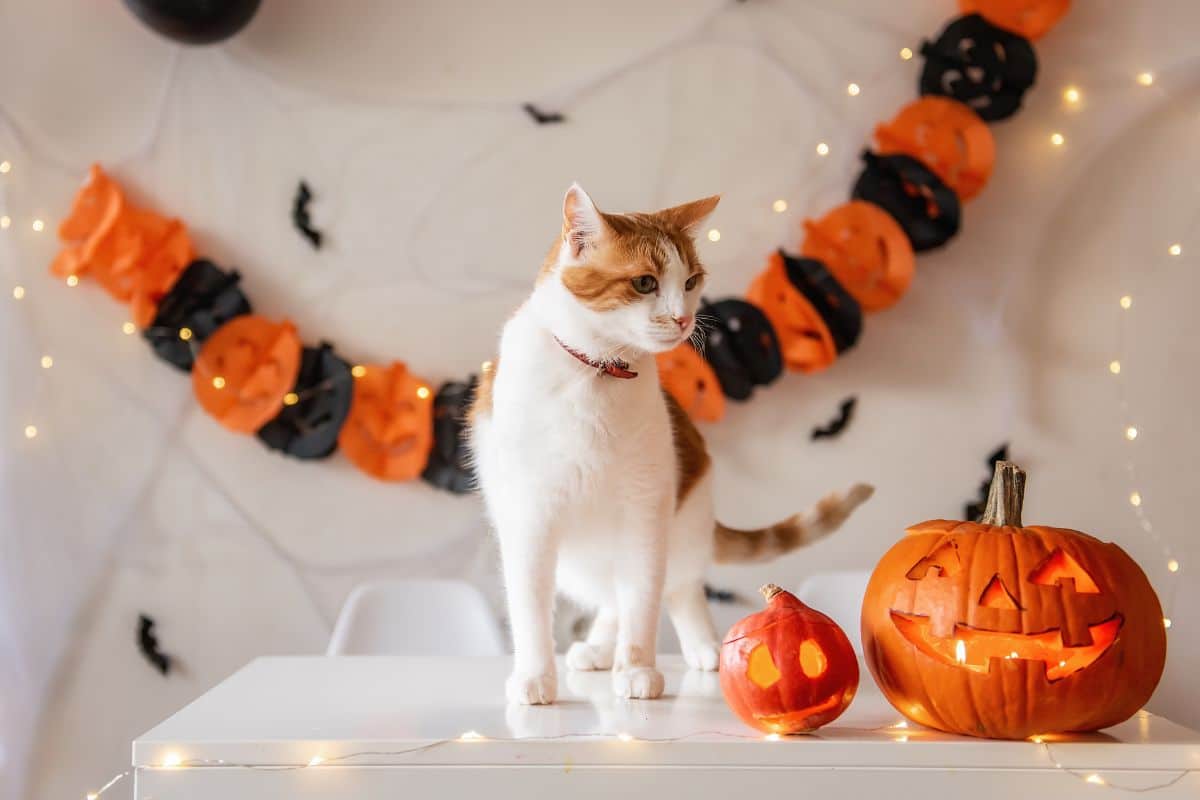
Halloween brings costumes, decorations, doorbell rings, and visitors to neighborhoods across New Orleans. While families enjoy the festivities, cats may find the sudden activity frightening. Loud voices, unfamiliar people, and changes in household routines can leave even normally relaxed cats feeling anxious. Creating a quiet, secure space before Halloween night can help protect your cat from stress, accidental escapes, and household hazards.
Why Do Cats Need a Safe Space on Halloween?
Cats depend on familiar surroundings and predictable routines to feel secure. Halloween introduces unusual sounds, smells, and movements that may disrupt their sense of safety.
Common Halloween stressors include:
- Repeated doorbell rings and knocking
- Loud costumes, masks, and unfamiliar visitors
- Flashing decorations and sudden noises
- Children running through the house
- Frequent opening and closing of exterior doors
Some cats hide, while others become restless or vocal. A designated retreat allows your cat to move away from these disturbances without feeling trapped.
How to Set Up a Cat-Friendly Halloween Room
1. Choose a Quiet Room Away From Visitors
Select a bedroom, home office, or another familiar room away from the front entrance.
The room should have a secure door, a comfortable temperature, and minimal outside noise. Close windows and check that screens are secure.
Avoid unfamiliar storage rooms or areas containing cleaning chemicals, exposed cords, or other hazards.
2. Provide Familiar Bedding and Hiding Places
Cats often feel safer when surrounded by familiar scents.
Place your cat’s regular bed, blanket, or favorite resting cushion inside the room. Add a cardboard box or covered cat bed where your cat can hide.
Make sure your cat can enter and leave the hiding place freely. Never force a frightened cat out of hiding.
3. Keep Essential Supplies Accessible
Your cat should have everything it needs to stay comfortable throughout the evening.
Include:
- Fresh drinking water
- A clean litter box
- Familiar food at regular feeding times
- A scratching surface
- Favorite toys and resting areas
Keep food and water separate from the litter box.
For older cats or those with mobility problems, choose supplies that are easy to reach.
4. Reduce Halloween Noise and Visual Distractions
Close curtains to limit flashing lights and movement outside.
Soft background music or a fan may help mask intermittent noise, provided your cat is already comfortable with those sounds.
Keep the volume low. Avoid introducing unfamiliar sounds or devices that could increase anxiety.
When Should You Prepare Your Cat’s Safe Room?
Prepare the room several days before Halloween, not when trick-or-treaters arrive.
Allow your cat to explore voluntarily. Place treats or familiar toys inside to encourage positive associations.
On Halloween evening, guide your cat into the room before visitors begin arriving. Check that everyone in the household knows to keep the door closed.
For cats that become distressed easily, consult a vet near you before the holiday about additional stress-management options.
How Can You Tell If Your Cat Is Stressed?
Halloween anxiety can appear through changes in behavior.
Watch for:
- Hiding longer than usual
- Flattened ears or a tucked tail
- Excessive vocalization
- Pacing or repeated attempts to escape
- Reduced interest in food
- Hissing or defensive behavior
Mild fear that resolves once the environment becomes quiet may be monitored.
However, persistent behavioral changes, appetite loss, or unusual litter box habits deserve veterinary attention. These signs can also indicate medical problems.
If your cat develops difficulty breathing, collapses, or repeatedly strains to urinate without producing urine, seek emergency veterinary care.
Call our animal hospital now if you need guidance on concerning symptoms or to arrange an examination.
Additional Halloween Safety Precautions for Indoor Cats
A quiet room is only one part of Halloween safety.
Keep chocolate, candy wrappers, ribbons, string, and electrical decorations inaccessible. Some items can cause poisoning, choking, or intestinal injuries if swallowed.
Confirm that your cat’s identification and microchip contact information are current. Even indoor cats may escape if doors are opened repeatedly.
If your cat is extremely fearful, discuss behavioral support with a veterinarian before Halloween. Never administer human anxiety medications or sedatives without veterinary direction.
Help Your Cat Feel Secure This Halloween
A familiar retreat, consistent routine, and careful supervision can make Halloween less stressful for your feline companion. If your cat struggles with fear or unusual behavior, The Cat Practice can help assess possible causes and discuss appropriate care.
Contact our hospital to schedule an appointment with a veterinarian in New Orleans and prepare your cat for a safer, calmer Halloween night.
Frequently Asked Questions
1. Should I Keep My Cat in a Separate Room on Halloween?
Ans: A separate, familiar room can reduce exposure to visitors and noise. Provide food, water, litter, and comfortable hiding places. If your cat remains distressed despite these precautions, veterinary guidance may help.
2. How Early Should I Prepare My Cat for Halloween?
Ans: Begin several days in advance, especially if your cat is sensitive to changes. Introduce the room gradually and maintain regular routines. A veterinary consultation can help address severe anxiety before the festivities.
3. Can Halloween Stress Make My Cat Stop Eating?
Ans: Stress may temporarily reduce appetite, but illness can cause similar changes. Contact a veterinarian if your cat refuses food for 24 hours, or sooner if your cat is young, medically vulnerable, or showing other symptoms.
4. Are Halloween Decorations Dangerous for Cats?
Ans: Yes. String decorations, electrical cords, candles, and small plastic objects can create hazards. Keep these items inaccessible. If your cat swallows a foreign object or potentially toxic substance, contact a veterinarian promptly.
5. Should I Use Calming Products for My Cat on Halloween?
Ans: Some cats may benefit from feline pheromone products or other veterinarian-recommended measures. Results vary. Ask your veterinarian which options are appropriate, particularly if your cat takes medication or has a medical condition.
6. When Should I Seek Veterinary Help for Halloween Anxiety?
Ans: Schedule an examination if fear persists, disrupts eating or elimination, or leads to repeated escape attempts. Sudden severe behavioral changes may indicate illness rather than anxiety and should not be dismissed as holiday stress.
Related Articles



