
Supporting Your Cat’s Golden Years

As cute as kittens are, our senior patients deserve some love too! The Cat Practice proudly serves the New Orleans area allowing your senior cat to have the best care and love during their advanced years.



Caring for Your Senior Feline Family Member
Due to improved veterinary care, better nutrition, and education, our pets are living longer than ever before and, more often than not, they are getting a chance to experience life as an “older” animal. There is a lot that can be done to keep our furry friends healthy and to allow them to age with peace and grace during this life transition. Older pet care considerations include an increase in frequency of veterinary care and monitoring, re-evaluating diet and nutritional needs, weight control, maintaining mobility and mental health and ensuring comfort through environmental accommodations.
The AAFP (American Association of Feline Practitioners) defines a senior cat at age 8 years or older and has set forth a set of guidelines for senior cats that you can read here. Attention to the older kitty is an important part of our practice. Your feline friend of that many years deserves that special focus of senior care.
What are some health complications or diseases that are commonly experienced by seniors?
There are some problems that are statistically more likely to occur as your cat gets older, such as:
- High Blood Pressure (Hypertension)
- Organ Dysfunction
- Cancer
- Arthritis and Cognitive Disorders
The Cat Practice will tailor a customized senior check-up to take into account the general problems of senior cat care and any specific problems your kitty may be having.
What can I expect during my senior cat’s checkup?
First of all, you may have specific concerns about your cat and questions you need to have answered. We will also cover the following:
- History: Even if your cat has seen a veterinarian every year of its life, a focused clinical history and exam needs to become a priority when your cat gets older. This history and physical exam should be focused on issues of lifestyle and behavior, appetite and diet changes, mobility (or lack thereof) changes, changes in bathroom habits, and changes in sleeping or activity patterns.
- Complete physical examination: We will assess everything, from the tip of the nose to the end of the tail.
- Testing: Depending on your cat’s individual age and circumstances, we may recommend routine laboratory testing for even a healthy looking cat. The AAFP (American Association of Feline Practitioners) recommends that the testing includes at least:
- Complete blood counts
- Chemistry screening – blood tests to evaluate kidney, liver, sugar, etc.
- Urinalysis
- Thyroid hormone level
- Blood pressure
- Routine wellness care – including appropriate parasite control, vaccinations, dental care, weight management, etc.
- Discussion of age-related issues/changes: We may take this opportunity to talk to you about things to expect or look out for as your cat ages such as vision or hearing deficits, mobility issues (from jumping up and down off of high places to having difficulty just getting in and out of a litter pan), cognitive dysfunction or kidney disease.
Making sure to bring in your cat for regular care allows us to continue with preventative measures too!

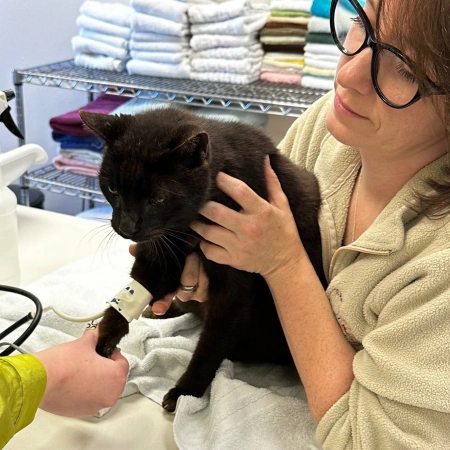
Bloodwork
Doing bloodwork for your senior kitty allows us to “look inside the envelope” so we can discover problems not evident on a physical exam alone. We want all the testing to come back normal…but, should it not, we will counsel you on what the next medical steps should be for your feline family member to get your kitty feeling better as quickly as possible.

Urinalysis
A urinalysis is a VERY important test in monitoring the overall health of a senior kitty. Upper (kidney) and lower (bladder) urinary tract disease can be assessed through a urinalysis as well as other problems like diabetes, liver disease, and urinary crystal formation.
Diagnostic Imaging
At The Cat Practice, we have state of the art digital imaging and pride ourselves on delivering fast results so we can check for any and all issues that may arise. Your senior pet is our top priority and we are more than happy to go over any issues you may be concerned about. Scheduling digital imaging doesn’t need to be complicated, especially when you get to enjoy the benefits of having our digital imaging suite in house!


