
Cats are remarkably good at hiding discomfort, which means dental problems can develop for a long time before an owner notices something is wrong. Periodontal disease is one of the most common dental conditions in cats and can gradually affect the gums, supporting tissues, and teeth. Understanding how the disease progresses can help cat owners recognize changes earlier and take steps to protect their pet’s oral health.
What Is Periodontal Disease in Cats?
Periodontal disease is an inflammatory condition that affects the tissues surrounding and supporting the teeth. It usually begins when plaque, a sticky film containing bacteria, builds up on the teeth. If plaque is not removed, it can harden into tartar, which further irritates the gums and provides a surface where additional bacteria can accumulate.
Over time, inflammation can extend below the gumline and damage the structures that hold the teeth in place. Regular cat dental care can help identify plaque, tartar, gingivitis, and other oral concerns before they become more advanced.
Stage 1: Plaque Begins to Build Up
The earliest stage starts with plaque formation. Cats naturally develop plaque after eating because bacteria and food particles collect along the surfaces of their teeth.
At this point, there may be few noticeable signs. A cat may continue eating normally and behave as usual. However, daily plaque accumulation creates the foundation for future dental problems.
Routine oral examinations can help identify early changes that may not be obvious at home.
Stage 2: Tartar and Gingivitis Develop
When plaque remains on the teeth, minerals in saliva can cause it to harden into tartar, also called calculus. Unlike soft plaque, tartar cannot simply be wiped away.
The gums may become red, swollen, or irritated as bacteria accumulate around the teeth. This early gum inflammation is known as gingivitis.
Some cats develop persistent bad breath at this stage. Others may show subtle behavioral changes, such as being less interested in grooming, playing, or having their face touched.
Stage 3: Periodontal Disease Progresses Below the Gumline
As inflammation continues, bacteria can move beneath the gumline. The tissues surrounding the teeth become increasingly affected, and the attachment between the gums and teeth can begin to deteriorate.
This stage may cause more noticeable discomfort, although cats often continue to hide signs of pain. You may see drooling, difficulty chewing, food dropping from the mouth, changes in appetite, or increased sensitivity around the face.
A cat may also begin favoring one side of the mouth when chewing. Because these signs can be subtle, regular veterinary examinations are important for identifying dental disease.
Stage 4: Damage to Supporting Tissues and Teeth
Advanced periodontal disease can damage the tissues and bone that support the teeth. As these structures weaken, teeth may become loose or eventually be lost.
Cats with advanced dental disease may have significant oral discomfort. They may eat differently, avoid certain foods, groom less frequently, or become more withdrawn.
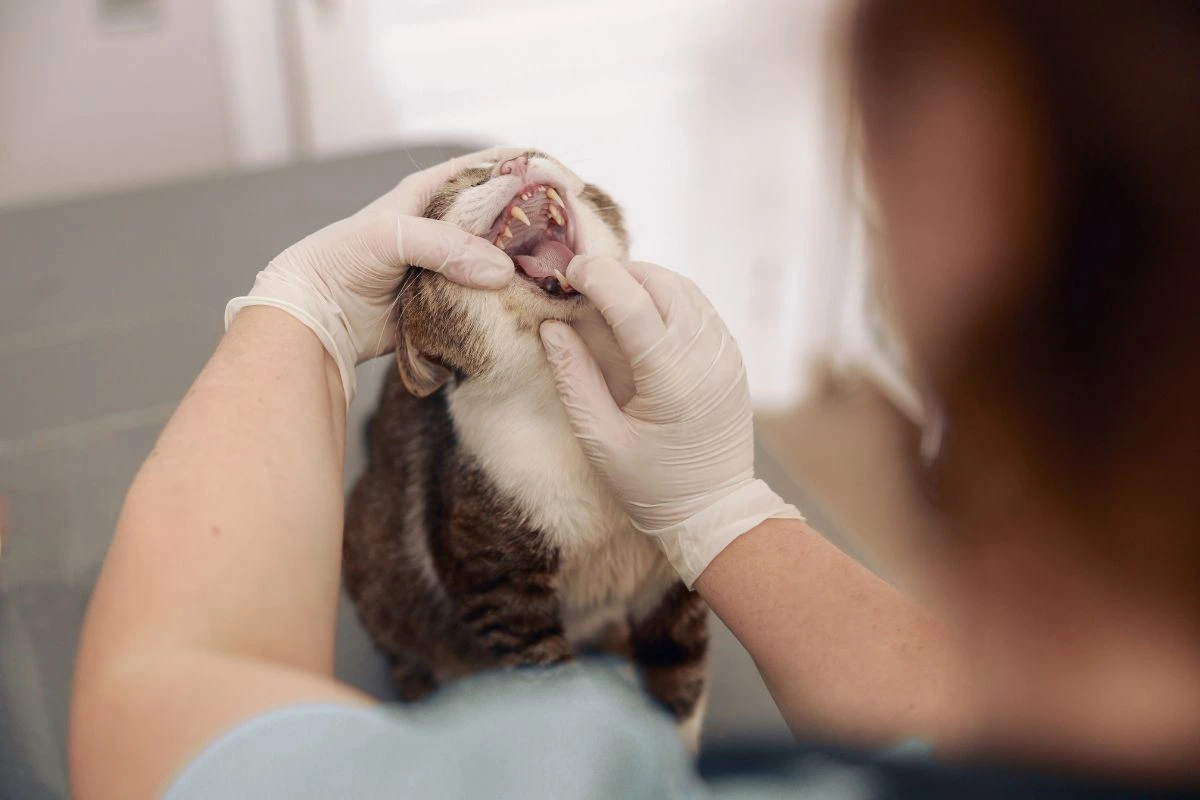
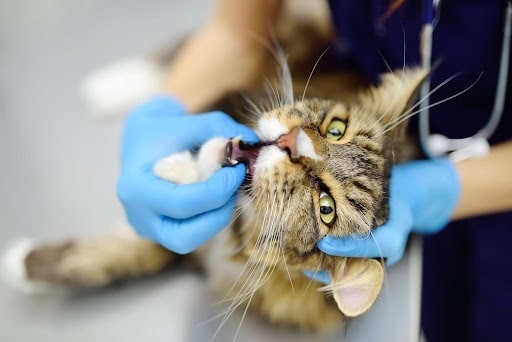
Professional dental examinations allow a veterinarian to evaluate areas that cannot be fully assessed simply by looking at the visible portion of a cat’s teeth. The Cat Practice notes that some feline dental problems are discovered only during a thorough oral examination.
Signs Cat Owners Should Watch For
Because cats frequently conceal pain, small changes can be meaningful. Watch for:
- Persistent or unusually strong bad breath
- Red or swollen gums
- Yellow or brown tartar
- Drooling
- Pawing at the mouth
- Difficulty chewing
- Dropping food while eating
- Reduced appetite
- Loose or missing teeth
- Changes in grooming habits
- Increased irritability or withdrawal
Not every sign indicates periodontal disease, but noticeable changes in your cat’s eating or behavior deserve attention from a veterinary professional.
How Can Periodontal Disease Be Managed?
The appropriate approach depends on the severity of the dental disease. A veterinarian may recommend a detailed oral examination, professional dental cleaning, dental X-rays, treatment of affected areas, or extraction of teeth that cannot be preserved.
Professional cleaning can remove plaque and tartar from tooth surfaces. According to The Cat Practice’s dental-care information, cleaning may involve hand scaling and ultrasonic scaling, followed by polishing to smooth the enamel surfaces.
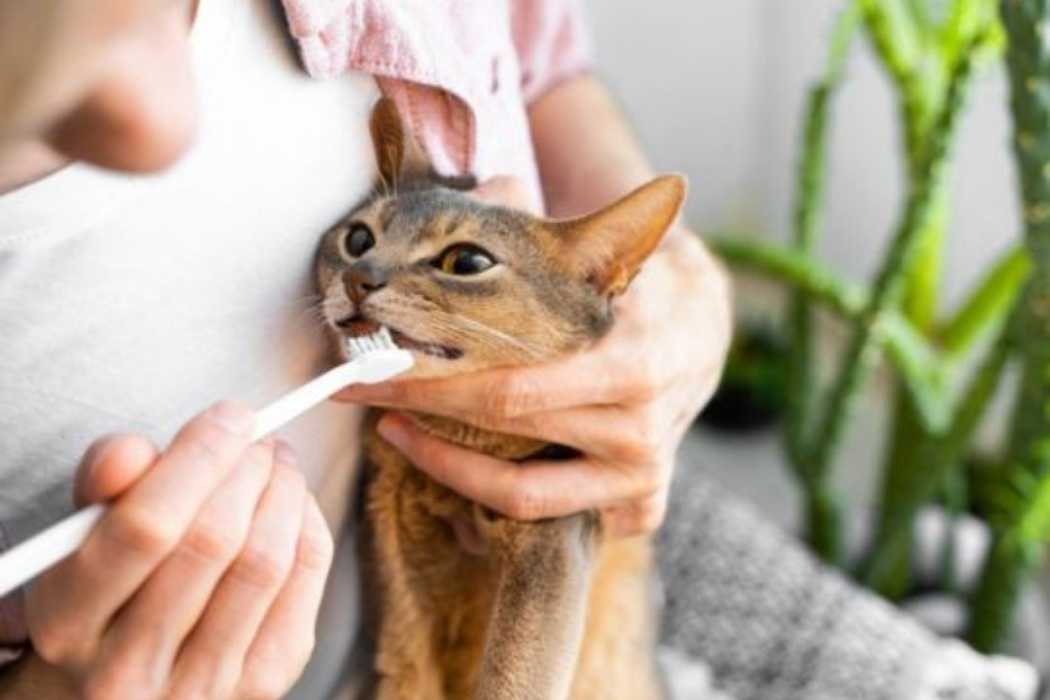
At home, owners can also support oral health by following veterinary recommendations for brushing, dental products, and other appropriate oral-care routines.
Why Early Dental Attention Matters
Dental disease generally develops gradually, which gives owners an opportunity to identify changes and seek professional guidance. Addressing oral health concerns earlier may help limit progression and preserve healthy teeth and gums.
Good dental health also supports everyday activities such as eating and grooming. Since cats can hide oral discomfort, routine examinations are an important part of ongoing veterinary care.
Supporting Better Dental Health for Your Cat
Understanding the progression of periodontal disease can help cat owners recognize changes before oral problems become more advanced. If you are looking for a vet in New Orleans who focuses exclusively on feline care, The Cat Practice provides dental and comprehensive veterinary services for cats. Its feline-focused animal hospital offers professional dental care as part of its broader approach to cat health.
If your cat has signs of dental disease or you simply want to have its oral health evaluated, schedule an appointment with our cat animal hospital to discuss appropriate veterinary care and cat dental care.
Frequently Asked Questions
1. What causes periodontal disease in cats?
Ans: Periodontal disease commonly begins with plaque buildup. If plaque remains on the teeth, it can harden into tartar and contribute to gum inflammation and damage to the tissues supporting the teeth.
2. Is bad breath normal for cats?
Ans: Persistent or strong bad breath is not something owners should automatically consider normal. It can be associated with plaque, tartar, gingivitis, periodontal disease, or other oral conditions.
3. Can periodontal disease cause a cat to stop eating?
Ans: Oral discomfort may make chewing difficult or unpleasant, which can contribute to changes in eating habits. A noticeable reduction in appetite should be discussed with a veterinarian.
4. How can I tell if my cat has dental disease?
Ans: Look for signs such as bad breath, red gums, visible tartar, drooling, difficulty chewing, pawing at the mouth, or changes in grooming and eating behavior. A professional oral examination is needed for an accurate assessment.
5. Can periodontal disease be prevented?
Ans: Regular dental examinations and appropriate at-home oral hygiene can help reduce plaque accumulation and support healthier teeth and gums. Your veterinarian can recommend products and techniques appropriate for your cat.
6. When should my cat have a dental examination?
Ans: Dental health should be evaluated during routine veterinary visits, particularly when you notice changes in breath, gums, eating, or behavior. If you have concerns about your cat’s mouth, scheduling an examination can help determine what care may be appropriate.